
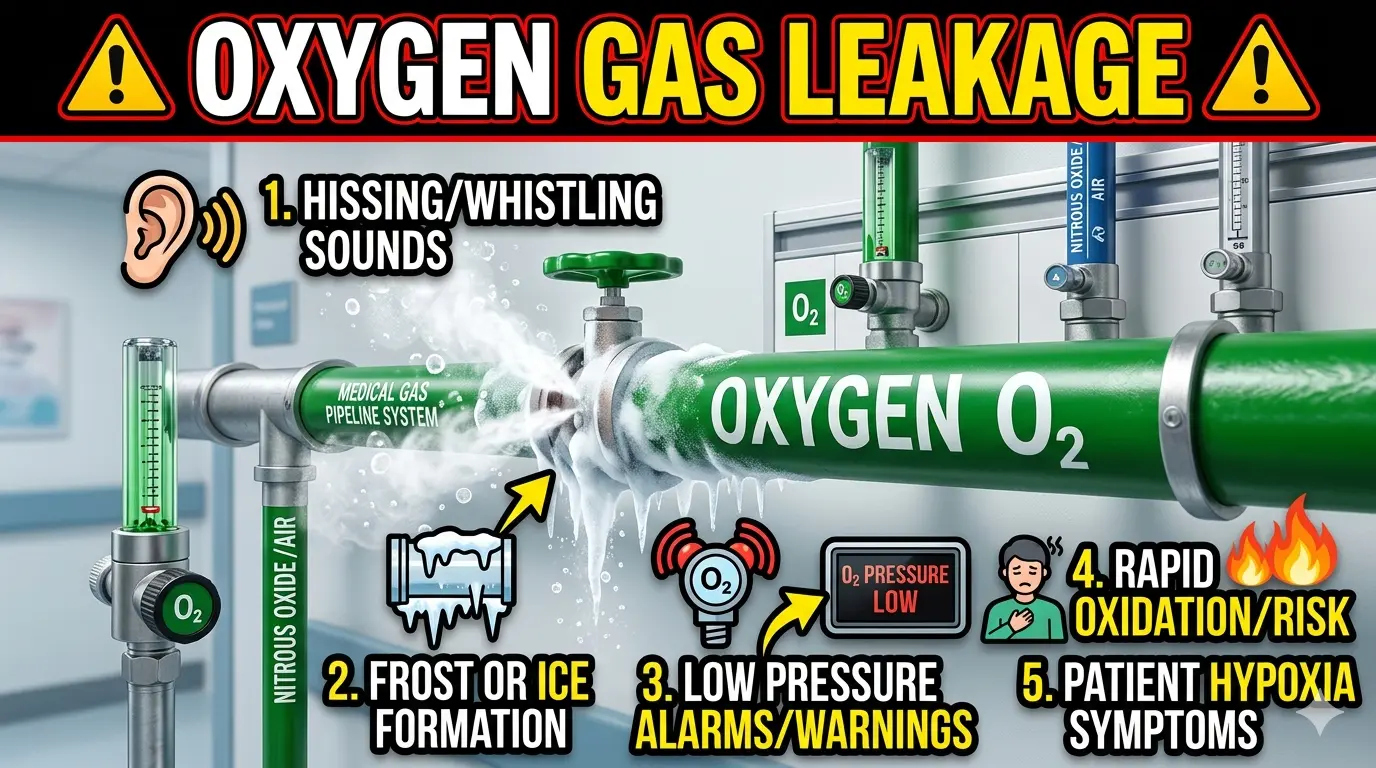
Medical oxygen is one of the most critical resources in any healthcare facility. Hospitals rely on a Medical Gas Pipeline System (MGPS) to deliver oxygen safely and continuously to patient care areas such as ICUs, operation theatres, emergency rooms, recovery wards, and general patient rooms. While these systems are designed to operate efficiently, even a small oxygen leak can lead to significant oxygen wastage, increased operating costs, and potential disruptions in oxygen supply.
Many hospitals focus on oxygen generation and storage but often overlook the importance of identifying oxygen gas leakage within the pipeline network. Since oxygen travels through a complex system of pipes, valves, regulators, and outlets, leaks can develop over time due to wear and tear, improper maintenance, damaged fittings, or aging infrastructure.
Understanding the signs of oxygen gas leakage is essential for biomedical engineers, maintenance teams, and hospital administrators. Early identification helps prevent oxygen wastage, improves operational efficiency, and ensures reliable oxygen delivery to patients.
Why Oxygen Leakage Is a Serious Concern in Hospitals
An oxygen leak in a hospital is more than just a maintenance issue. Medical oxygen is a critical utility, and any unnecessary loss directly affects hospital resources. In facilities that consume large volumes of oxygen every day, even minor leaks can result in substantial losses over time.
When hospital oxygen leakage goes unnoticed, hospitals may experience higher oxygen consumption, increased refill frequency, and unnecessary operational expenses. In severe cases, leakage may contribute to pressure fluctuations within the MGPS network, affecting oxygen delivery performance.
Because oxygen is distributed throughout multiple departments, identifying the exact location of a medical gas pipeline leak can sometimes be challenging. This is why hospitals increasingly invest in oxygen leak monitoring solutions that help identify abnormalities before they become major problems.
Common Signs of Oxygen Gas Leakage in Medical Gas Pipelines
One of the earliest indicators of oxygen gas leakage is unexplained oxygen consumption. If a hospital notices that oxygen cylinders require more frequent replacement or the liquid oxygen tank is depleting faster than expected, leakage may be a contributing factor.
Another common sign is a sudden increase in oxygen demand without any corresponding increase in patient load. When oxygen usage appears unusually high, biomedical teams often begin investigations to detect oxygen leak issues within the pipeline network.
Pressure instability can also indicate a problem. Although pressure fluctuations may occur for various reasons, a persistent drop in pressure may suggest an oxygen pipeline leakage issue. When oxygen escapes from the pipeline, system pressure may gradually decline, especially during periods of high demand.
Unusual sounds around pipeline joints, valves, and outlet points can also signal leakage. A faint hissing noise is often associated with escaping gas and should never be ignored.
In addition, maintenance teams may notice that oxygen generation systems or PSA plants are operating more frequently than normal. This increased workload can sometimes be linked to an undetected oxygen leak somewhere in the MGPS network.
Causes of Oxygen Leakage in MGPS Systems
To understand effective oxygen leakage detection, it is important to know what causes leaks in the first place.
One common cause is aging infrastructure. Over time, pipeline joints, connectors, seals, and valves may deteriorate. As components age, the risk of oxygen gas leakage increases.
Improper installation is another factor. Even a small error during installation can create weak points that eventually develop into an oxygen pipeline leakage issue.
Mechanical damage can also contribute to leakage. Construction activities, accidental impacts, or improper handling of equipment may damage sections of the medical gas pipeline.
In some cases, poor maintenance practices allow minor issues to grow into significant leaks. Regular inspections are therefore essential for effective MGPS leak detection and long-term system reliability.
Environmental factors such as vibration, temperature changes, and continuous pressure cycling may also contribute to the development of a medical gas pipeline leak over time.
How Hospitals Perform Oxygen Leakage Detection
Modern hospitals use various methods for oxygen leakage detection depending on the size and complexity of their MGPS infrastructure.
Traditionally, maintenance teams performed manual inspections by checking pipeline connections, valves, and oxygen outlets. While these inspections remain valuable, they are often time-consuming and may not identify every oxygen leak.
Pressure monitoring is another common approach. When system pressure drops unexpectedly, engineers may investigate to detect oxygen leak conditions within the network.
Some hospitals conduct isolation testing by dividing sections of the pipeline and monitoring pressure behavior. This helps identify the location of a suspected medical gas pipeline leak.
Advanced healthcare facilities increasingly rely on continuous oxygen leak monitoring solutions that provide real-time data about oxygen flow, pressure, and consumption. These systems allow biomedical engineers to identify unusual patterns that may indicate leakage.
Because oxygen systems operate continuously, real-time oxygen leak monitoring provides a significant advantage over periodic manual inspections.
The Relationship Between Oxygen Consumption and Leakage
One of the most overlooked indicators of hospital oxygen leakage is abnormal oxygen consumption.
Many hospitals focus on oxygen supply without closely analyzing usage trends. However, when oxygen consumption begins increasing without a corresponding increase in patient demand, it may indicate a hidden leak.
For example, if oxygen usage rises despite stable occupancy rates, maintenance teams may need to detect oxygen leak issues within the MGPS network.
Monitoring oxygen flow, pressure, and consumption together provides valuable insights into system performance. This approach supports more effective oxygen leakage detection because engineers can compare actual demand against expected usage.
Over time, hospitals that actively monitor consumption trends are often able to identify oxygen pipeline leakage issues much earlier than facilities relying solely on manual inspections.
Why Early Detection Matters
Early MGPS leak detection offers several benefits.
First, it reduces oxygen wastage. Even a small oxygen leak can result in substantial oxygen loss when left unresolved for weeks or months.
Second, it helps maintain stable oxygen delivery throughout the hospital. A major medical gas pipeline leak can affect pressure performance and compromise system efficiency.
Third, early oxygen leakage detection helps reduce operating costs. Hospitals spend significant resources on oxygen supply, and minimizing leakage contributes directly to cost savings.
Most importantly, proactive leak detection supports uninterrupted patient care by ensuring oxygen remains available where it is needed most.
How OxyData PPF Supports Oxygen Monitoring
As hospitals adopt smarter approaches to MGPS management, monitoring technologies are becoming increasingly important. One such solution is OxyData PPF, a monitoring device designed for medical gas pipeline applications.
Rather than relying solely on periodic inspections, hospitals can use OxyData PPF to monitor critical oxygen parameters such as purity, pressure, flow, and flow consumption directly within the pipeline system. By providing continuous visibility into these parameters, the device supports more effective oxygen leak monitoring and helps biomedical teams identify unusual changes that may indicate oxygen gas leakage.
Since abnormal flow behavior and unexpected consumption patterns are often associated with hospital oxygen leakage, monitoring these values can help maintenance teams investigate potential problems sooner. OxyData PPF also contributes to improved MGPS leak detection by providing real-time insights into oxygen system performance, helping hospitals maintain efficient and reliable oxygen delivery.
Building a Preventive Monitoring Strategy
The best approach to preventing oxygen wastage is not simply repairing leaks after they occur but identifying risks before they become major problems.
Hospitals should combine regular inspections, preventive maintenance, staff training, and continuous monitoring to strengthen oxygen leakage detection efforts.
Routine audits of valves, pipeline joints, outlets, and pressure systems can help identify developing issues early. At the same time, advanced oxygen leak monitoring solutions provide ongoing visibility into system performance.
By combining these strategies, hospitals can reduce the likelihood of oxygen pipeline leakage, improve oxygen efficiency, and enhance the reliability of their MGPS infrastructure.
Conclusion
An oxygen leak may seem minor at first, but its impact can be significant when left undetected. Increased oxygen consumption, pressure instability, unexpected oxygen losses, and higher operating costs are all potential consequences of oxygen gas leakage within a hospital’s MGPS network.
Understanding the warning signs, implementing effective oxygen leakage detection practices, and investing in modern oxygen leak monitoring solutions can help hospitals identify issues early and reduce wastage. As healthcare facilities continue to modernize their infrastructure, proactive monitoring and timely MGPS leak detection will play an increasingly important role in maintaining safe, efficient, and reliable oxygen delivery systems.
People Also Ask – FAQs
How can hospitals identify oxygen gas leakage in medical pipelines?
Hospitals can identify oxygen gas leakage by using OxyData PPF that monitors oxygen consumption, checks for pressure drops, performs pipeline inspections, and uses continuous oxygen leak monitoring systems that track flow and usage patterns.
What are the common signs of oxygen leakage in MGPS systems?
Common signs include unexplained increases in oxygen consumption, pressure fluctuations, frequent oxygen refills, hissing sounds near pipeline joints, and abnormal flow behavior within the MGPS network.
Can oxygen leakage increase oxygen consumption in hospitals?
Yes. Hospital oxygen leakage often results in higher oxygen usage because oxygen escapes from the pipeline before reaching its intended destination, leading to unnecessary wastage.
How do biomedical engineers detect oxygen leakage in pipelines?
Biomedical engineers use pressure testing, flow analysis, consumption monitoring, and advanced oxygen leakage detection systems like OxyData PPF to detect oxygen leak conditions within medical gas pipelines.
Can oxygen monitoring devices help identify leakage issues?
Yes. Modern monitoring devices like OxyData PPF can support MGPS leak detection by continuously tracking oxygen flow, pressure, and consumption, making it easier to identify unusual patterns that may indicate leakage.