
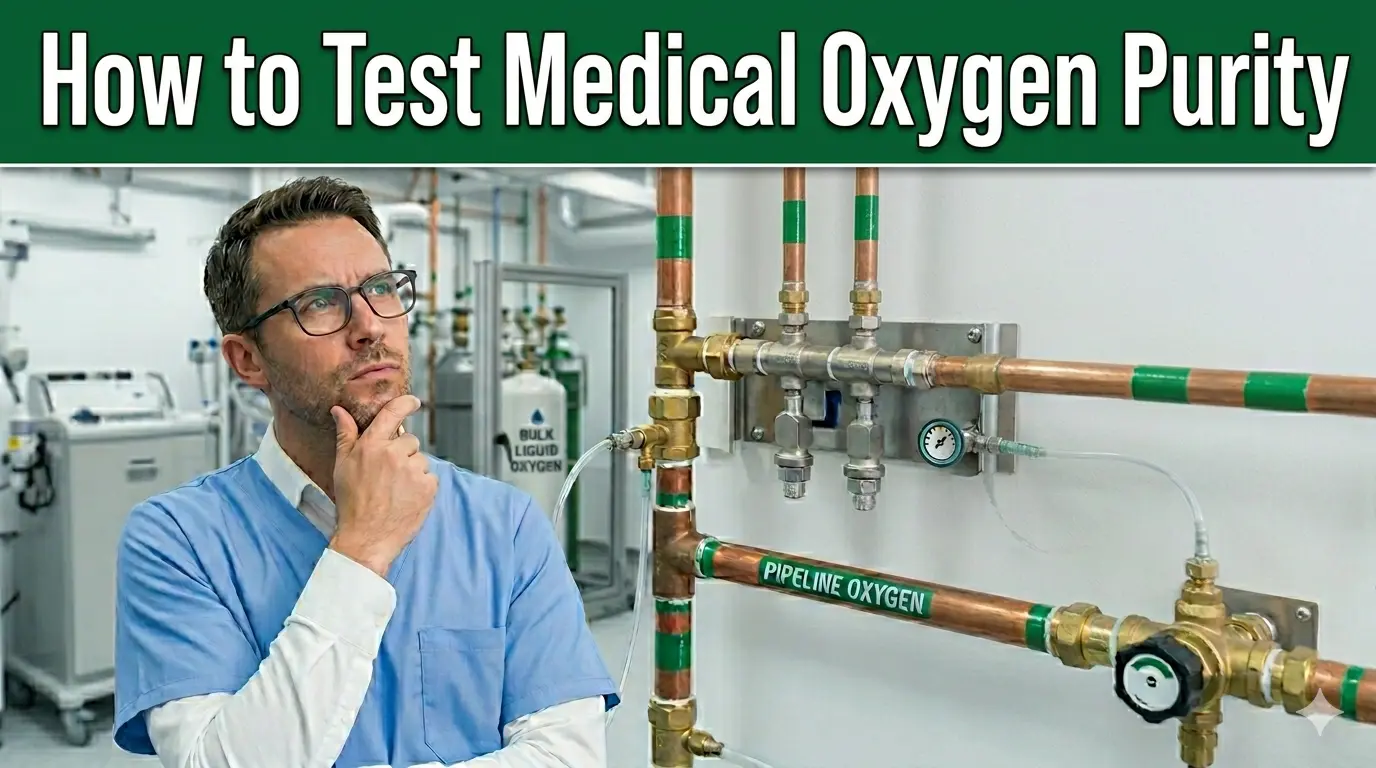
Medical oxygen plays a vital role in patient care across hospitals, clinics, emergency departments, operation theatres, and intensive care units. While oxygen availability is important, the quality of oxygen being delivered through the Medical Gas Pipeline System (MGPS) is equally critical. This is why hospitals place significant emphasis on oxygen purity and routinely perform checks to ensure that patients receive oxygen that meets required healthcare standards.
Whether oxygen is supplied through a PSA oxygen generation plant, liquid oxygen tank, oxygen cylinders, or a centralized pipeline network, maintaining proper medical oxygen purity is essential for safe and effective treatment. If oxygen quality falls below acceptable levels, it may impact patient care and indicate potential issues within the oxygen generation or distribution system.
For biomedical engineers, facility managers, and hospital administrators, understanding how to check oxygen purity and perform an accurate oxygen purity test is an important part of hospital infrastructure management.
Why Oxygen Purity Matters in Hospitals
When hospitals discuss oxygen supply systems, the conversation often focuses on availability and pressure. However, oxygen purity is just as important because it determines the concentration of oxygen being delivered to patients.
Medical oxygen is expected to meet specific medical oxygen standards established by healthcare and regulatory authorities. These standards help ensure that oxygen supplied through medical gas pipelines remains suitable for clinical use.
Poor hospital oxygen quality may occur due to equipment malfunction, PSA plant issues, contamination, maintenance problems, or system inefficiencies. For this reason, hospitals perform regular oxygen purity monitoring to ensure that oxygen quality remains within acceptable limits.
Without proper monitoring, hospitals may not immediately recognize changes in medical oxygen purity, potentially leading to operational challenges and compliance concerns.
What Is Medical Oxygen Purity?
Before discussing how to check oxygen purity, it is important to understand what oxygen purity actually means.
Medical oxygen purity refers to the percentage concentration of oxygen present within the supplied gas. Higher oxygen concentration generally indicates better oxygen quality for medical applications.
An oxygen purity test is performed to determine whether the oxygen being supplied through a pipeline, cylinder, or PSA system meets the required concentration levels.
Healthcare facilities routinely perform oxygen purity measurement to verify that oxygen production and distribution systems are functioning correctly. Regular testing helps hospitals maintain compliance with medical oxygen standards and supports patient safety initiatives.
Because oxygen is used continuously throughout hospitals, maintaining consistent oxygen purity is a key objective for biomedical and engineering teams.
Why Hospitals Need Oxygen Purity Monitoring
Many healthcare facilities now consider oxygen purity monitoring an essential part of MGPS management.
Traditionally, oxygen quality checks were performed periodically using handheld devices and manual inspection procedures. While these methods remain useful, modern hospitals increasingly prefer continuous oxygen purity monitoring because it provides real-time visibility into oxygen quality.
Continuous monitoring allows biomedical teams to quickly identify changes in medical oxygen purity before they become serious operational issues.
In large healthcare facilities where oxygen is supplied across multiple departments, routine oxygen purity measurement helps ensure that oxygen quality remains consistent throughout the pipeline network.
Regular monitoring also helps hospitals verify compliance with internal quality requirements and recognized medical oxygen standards.
How Hospitals Perform an Oxygen Purity Test
Hospitals use various methods to conduct an oxygen purity test depending on their infrastructure and monitoring requirements.
The most common approach involves using an oxygen analyzer. This device measures the oxygen concentration within the supplied gas and provides an accurate reading of oxygen quality.
To check oxygen purity, biomedical engineers typically collect readings from oxygen generation systems, medical gas pipeline outlets, or designated monitoring points within the MGPS network.
The collected data is then used for oxygen purity measurement and comparison against the required medical oxygen standards.
Many hospitals perform these checks regularly as part of preventive maintenance programs. The frequency of testing often depends on the oxygen source, hospital policies, and regulatory requirements.
Since oxygen quality can vary due to equipment performance or operational conditions, routine oxygen purity monitoring remains an important practice in healthcare facilities.
Factors That Can Affect Medical Oxygen Purity
Several factors may influence medical oxygen purity within a hospital environment.
One common factor is PSA plant performance. Since PSA plants generate oxygen onsite, any efficiency issue within the system may impact oxygen purity levels.
Equipment maintenance also plays a significant role. Filters, compressors, valves, and related components require proper upkeep to maintain consistent hospital oxygen quality.
Pipeline conditions can also affect oxygen delivery. Although medical gas pipelines are designed to transport oxygen safely, maintenance issues or system abnormalities may influence oxygen quality over time.
Environmental conditions, equipment aging, and operational errors may further impact oxygen purity measurement results.
Because multiple variables can influence oxygen quality, hospitals rely on regular oxygen purity test procedures to maintain confidence in their oxygen supply systems.
Benefits of Regular Oxygen Purity Measurement
Performing routine oxygen purity measurement offers several operational and clinical benefits.
First, it helps hospitals maintain compliance with established medical oxygen standards. This is particularly important for healthcare facilities undergoing inspections, audits, or accreditation assessments.
Second, regular oxygen purity monitoring helps identify equipment issues early. If oxygen concentration begins to decline, maintenance teams can investigate the source of the problem before it affects hospital operations.
Third, monitoring contributes to better hospital oxygen quality management by providing consistent visibility into oxygen system performance.
Most importantly, routine testing ensures that patients receive oxygen that meets expected quality requirements.
As oxygen infrastructure becomes increasingly advanced, continuous oxygen purity monitoring is becoming a standard practice in modern healthcare facilities.
Role of Oxygen Analyzers in Oxygen Purity Testing
An oxygen analyzer is one of the most important tools used for evaluating oxygen quality.
The primary function of an oxygen analyzer is to perform accurate oxygen purity measurement and provide real-time information about oxygen concentration levels.
Hospitals commonly use an oxygen analyzer during maintenance procedures, commissioning activities, quality checks, and routine inspections.
By helping biomedical teams check oxygen purity, these devices support effective oxygen system management and improve confidence in oxygen delivery performance.
Modern monitoring solutions often incorporate analyzer technology directly into pipeline monitoring systems, allowing continuous assessment of medical oxygen purity without relying solely on manual testing.
How OxyData PPF Supports Oxygen Purity Monitoring
As hospitals increasingly adopt digital monitoring solutions, there is growing interest in technologies that provide continuous visibility into oxygen system performance.
One such solution is OxyData PPF, a monitoring device designed specifically for medical gas pipeline applications. The device helps hospitals monitor important parameters such as oxygen purity, pressure, flow rate, and flow consumption directly from the MGPS network.
By supporting continuous oxygen purity monitoring, OxyData PPF helps biomedical teams gain better insight into medical oxygen purity levels within the pipeline system. Instead of relying only on periodic checks, hospitals can use monitoring data to improve oxygen purity measurement processes and maintain consistent hospital oxygen quality.
For facilities seeking a practical way to check oxygen purity while also monitoring other important oxygen parameters, integrated solutions such as OxyData PPF provide enhanced visibility into overall oxygen system performance.
The Future of Oxygen Quality Monitoring
The healthcare industry is moving toward smarter and more connected infrastructure systems. Oxygen monitoring is no exception.
As hospitals continue investing in digital technologies, oxygen purity monitoring is expected to become increasingly automated. Real-time dashboards, IoT connectivity, remote monitoring capabilities, and advanced analytics will help biomedical teams manage oxygen systems more efficiently.
Continuous oxygen purity measurement will allow hospitals to respond more quickly to operational changes while maintaining compliance with medical oxygen standards.
With growing emphasis on patient safety and infrastructure reliability, regular oxygen purity test procedures and advanced monitoring systems will remain essential components of modern hospital operations.
Conclusion
Maintaining proper oxygen purity is a critical responsibility for every healthcare facility. By performing regular oxygen purity test procedures, hospitals can verify oxygen quality, support patient safety, and maintain compliance with established medical oxygen standards.
Whether oxygen is produced onsite or supplied through external sources, routine oxygen purity measurement helps ensure consistent hospital oxygen quality throughout the MGPS network. Combined with effective oxygen purity monitoring practices and reliable monitoring technologies, hospitals can confidently manage oxygen systems and deliver high-quality oxygen where it is needed most.
People Also Ask – FAQs
How can hospitals test medical oxygen purity?
Hospitals typically perform an oxygen purity test using our OxyData PPF an oxygen analyzer that measures oxygen concentration within the pipeline, PSA plant output, or oxygen supply source.
What should be the oxygen purity level in medical gas pipelines?
The required level depends on applicable medical oxygen standards and hospital guidelines. Healthcare facilities regularly conduct oxygen purity measurement to ensure compliance.
Why is oxygen purity monitoring important in hospitals?
Oxygen purity monitoring helps maintain patient safety, improve hospital oxygen quality, identify equipment issues early, and ensure compliance with healthcare requirements.
Can oxygen purity be monitored continuously?
Yes, by our OxyData PPF a Modern monitoring systems support continuous oxygen purity monitoring, allowing hospitals to track oxygen quality in real time rather than relying only on periodic testing.
Which device is used to measure medical oxygen purity?
An oxygen analyzer is the most commonly used device for measuring medical oxygen purity and performing accurate oxygen purity measurement.