
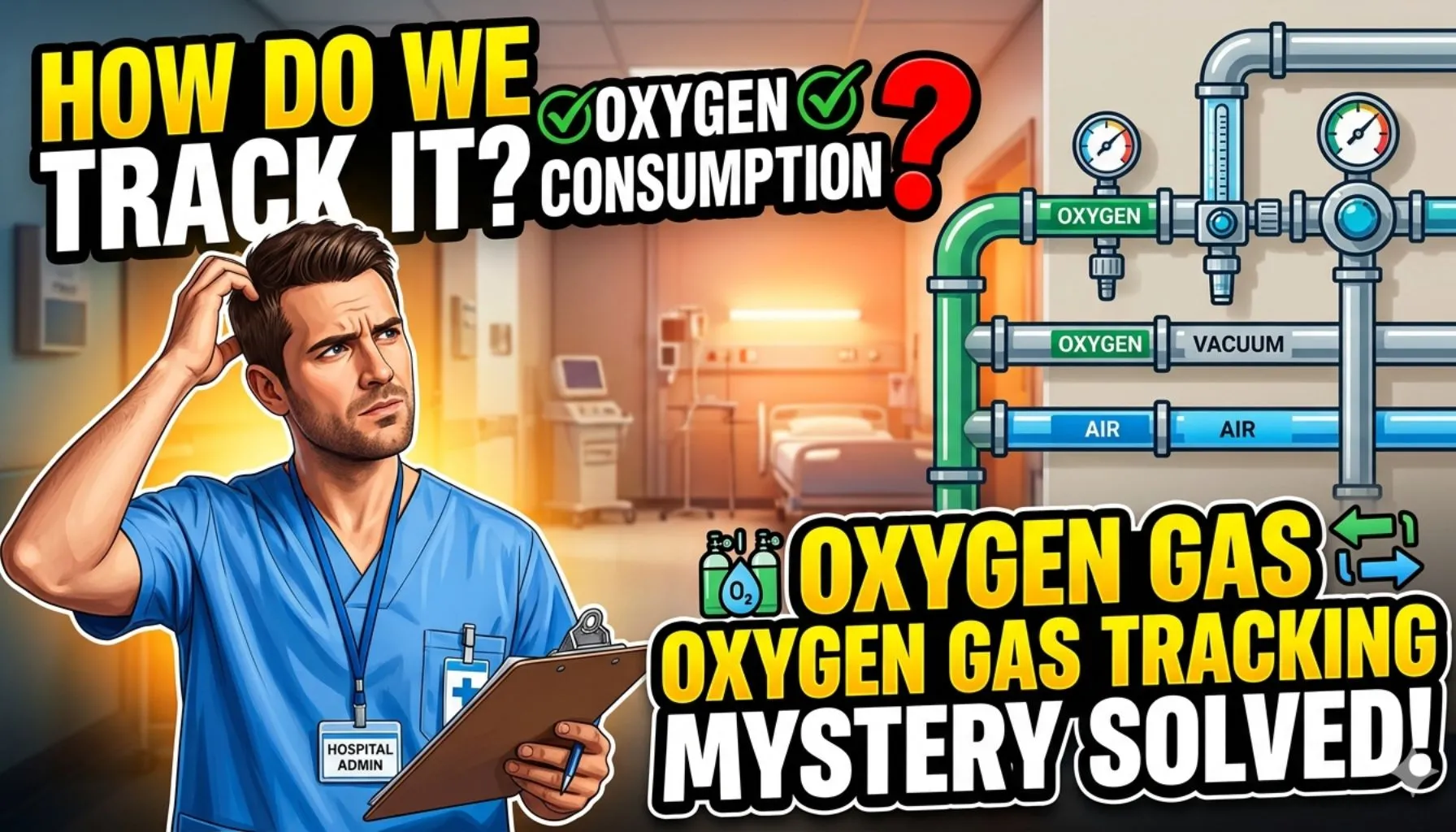
In hospitals, oxygen is one of the most critical medical utilities used every day across ICUs, operation theatres, emergency wards, recovery rooms, and patient care areas. With the increasing demand for medical oxygen systems, hospitals are now paying more attention to oxygen gas consumption to understand how much oxygen is being used, identify wastage, and ensure continuous supply through the medical gas pipeline network.
Tracking oxygen gas consumption is no longer only about maintaining records. It has become an important part of hospital infrastructure management because oxygen availability directly affects patient care. Whether the oxygen source comes from PSA plants, liquid oxygen tanks, cylinders, or centralized medical gas systems, hospitals need proper methods to measure oxygen gas consumption and monitor the overall pipeline performance.
Why Tracking Oxygen Consumption Matters in Hospitals
Medical oxygen usage can vary significantly depending on patient load, ICU occupancy, operation schedules, and emergency situations. Without proper monitoring, hospitals may face unexpected oxygen shortages, leakage issues, increased operating costs, or inaccurate planning.
This is where oxygen consumption monitoring becomes important. By understanding actual oxygen demand and usage patterns, hospitals can optimize supply systems and improve operational efficiency.
For example, a hospital may observe an increase in hospital oxygen consumption during seasonal disease outbreaks or higher ICU occupancy. Without accurate data, it becomes difficult to determine whether the increase is due to patient demand, leakage, wastage, or changes in oxygen delivery settings.
Tracking medical gas pipeline consumption also helps biomedical teams understand system behavior over time. Instead of relying only on oxygen tank levels or manual readings, hospitals can monitor usage continuously and make informed decisions.
How Hospitals Measure Oxygen Gas Consumption in Medical Gas Pipelines
Hospitals use different methods to measure oxygen gas consumption depending on their infrastructure and monitoring systems.
Traditionally, many hospitals relied on manual readings from flow meters, cylinder records, tank refill history, or PSA plant outputs. Staff members would calculate oxygen usage by comparing incoming supply against refill frequency. Although useful, this method often lacks real time visibility.
Modern hospitals now use oxygen consumption monitoring systems integrated with the medical gas pipeline network. These systems continuously monitor oxygen movement through pipelines and provide accurate usage information.
To measure oxygen gas consumption, hospitals usually monitor parameters such as:
- Oxygen flow rate
- Oxygen pressure
- Consumption trends
- Pipeline performance data
Among these parameters, oxygen flow consumption plays an important role because it helps determine how much oxygen is moving through the pipeline system over time.
By combining flow data with usage analysis, hospitals can perform better oxygen usage calculation and understand consumption patterns in different departments.
Role of Oxygen Flow Consumption in Hospital Monitoring
Many people confuse oxygen flow with oxygen consumption, but both serve different purposes.
Oxygen flow consumption refers to the amount of oxygen moving through the medical gas pipeline during a specific period. Oxygen consumption, on the other hand, represents actual oxygen usage across hospital departments.
Monitoring oxygen flow consumption allows hospitals to identify sudden increases or abnormal variations. For example, if oxygen demand remains stable but flow values rise unexpectedly, biomedical teams may investigate for leakage or system inefficiencies.
Tracking oxygen gas consumption together with flow data helps hospitals understand whether oxygen usage is normal or excessive.
This is why oxygen consumption in hospitals increasingly depends on continuous monitoring rather than manual calculations.
Challenges Hospitals Face in Oxygen Usage Monitoring
Although oxygen monitoring has become important, many hospitals still face challenges while implementing proper oxygen usage monitoring.
One common issue is the absence of real time visibility. Manual recording methods provide historical information but do not show current pipeline conditions.
Another challenge involves distributed medical gas systems where oxygen is supplied across multiple wards, ICUs, operation theatres, and departments. In such situations, understanding actual medical gas pipeline consumption becomes difficult.
Leakage is another major concern. Small oxygen losses often go unnoticed but may significantly affect hospital oxygen consumption over time.
In many hospitals, biomedical teams also struggle with accurate oxygen usage calculation because different departments consume oxygen at different rates. ICU demand may differ from OT usage, making manual estimation unreliable.
This is why modern oxygen consumption monitoring solutions are becoming increasingly important in healthcare facilities.
How Real Time Oxygen Monitoring Improves Hospital Operations
Real time oxygen usage monitoring gives hospitals continuous visibility into oxygen movement and usage trends.
Instead of waiting for daily reports, biomedical teams can immediately understand changes in oxygen gas consumption and respond quickly if abnormalities occur.
Real time systems help hospitals:
- Track live oxygen usage
- Improve oxygen planning
- Detect unusual consumption patterns
- Support preventive maintenance
- Reduce wastage
Continuous monitoring also improves oxygen consumption in hospitals because teams can compare usage patterns during different shifts, departments, or patient loads.
For hospitals operating PSA plants, real time monitoring helps optimize oxygen production according to actual demand.
Additionally, better oxygen usage calculation enables hospitals to forecast future oxygen requirements more accurately.
Continuous monitoring also improves oxygen consumption in hospitals because teams can compare usage patterns during different shifts, departments, or patient loads.
For hospitals operating PSA plants, real time monitoring helps optimize oxygen production according to actual demand.
Additionally, better oxygen usage calculation enables hospitals to forecast future oxygen requirements more accurately.
Understanding Medical Gas Pipeline Consumption Patterns
Every hospital has different oxygen requirements. A multispeciality hospital with multiple ICUs will show different medical gas pipeline consumption compared to smaller healthcare centers.
Therefore, hospitals often analyze:
- Daily consumption trends
- Peak usage hours
- Department wise oxygen demand
- Emergency consumption spikes
- Seasonal variations
Studying these patterns helps hospitals improve oxygen consumption monitoring and optimize inventory planning.
For example, if analysis shows increased hospital oxygen consumption during certain periods, hospitals can adjust storage levels and supply schedules accordingly.
Understanding oxygen gas consumption patterns also helps biomedical engineers identify abnormal usage behavior before it becomes a larger issue.
Introducing OxyData PPF for Oxygen Monitoring
As hospitals move toward smarter monitoring systems, there is growing demand for solutions that provide better visibility into oxygen parameters within medical gas pipelines.
OxyData PPF is designed to support hospitals by monitoring important oxygen parameters directly from the medical gas pipeline system. The device helps track oxygen purity, pressure, flow rate, and oxygen flow consumption, allowing biomedical teams to gain better insight into pipeline performance.
Instead of depending only on manual readings, hospitals can use OxyData PPF for improved oxygen consumption monitoring and better understanding of medical gas pipeline consumption trends. Since the device combines multiple monitoring capabilities in a single solution, it supports more efficient oxygen usage monitoring and helps teams perform accurate oxygen usage calculation for hospital operations.
For facilities looking to better understand oxygen consumption in hospitals, such monitoring systems can play an important role in improving visibility and decision making.
Future of Oxygen Consumption Monitoring in Hospitals
Hospitals are gradually moving toward digital monitoring systems to improve infrastructure management and patient safety.
The future of oxygen consumption monitoring will likely include centralized dashboards, IoT integration, remote access, and real time analytics.
As healthcare facilities expand, understanding oxygen gas consumption will become even more important because oxygen demand continues to increase across critical care environments.
Modern monitoring approaches will help hospitals:
- Improve oxygen availability
- Reduce wastage
- Optimize supply planning
- Enhance operational efficiency
Accurate oxygen usage monitoring will also support better resource allocation and long term planning.
As a result, tracking hospital oxygen consumption will no longer remain a manual task but become an essential part of smart hospital management.
People Also Ask – FAQs
How can hospitals measure oxygen gas consumption in medical gas pipelines?
Hospitals can measure oxygen gas consumption by monitoring oxygen flow, usage trends, and pipeline data through manual methods or by our advanced oxygen consumption monitoring systems integrated with medical gas pipelines.
Is it possible to monitor oxygen usage in real time in hospitals?
Yes. Wave Visions Modern oxygen usage monitoring systems OxyData PPF allow hospitals to monitor oxygen consumption continuously and provide real time visibility into usage patterns.
How do hospitals know how much oxygen is being consumed daily?
Hospitals analyze flow values, consumption trends, and monitoring data to understand daily hospital oxygen consumption and perform accurate oxygen usage calculation.
Can oxygen consumption be monitored at different pipeline locations?
Yes. Depending on the monitoring setup, hospitals can track medical gas pipeline consumption at multiple points to understand oxygen demand across different departments.
Why is tracking oxygen gas consumption important in hospitals?
Tracking oxygen gas consumption helps hospitals reduce wastage, improve planning, optimize supply management, and enhance overall oxygen system performance.